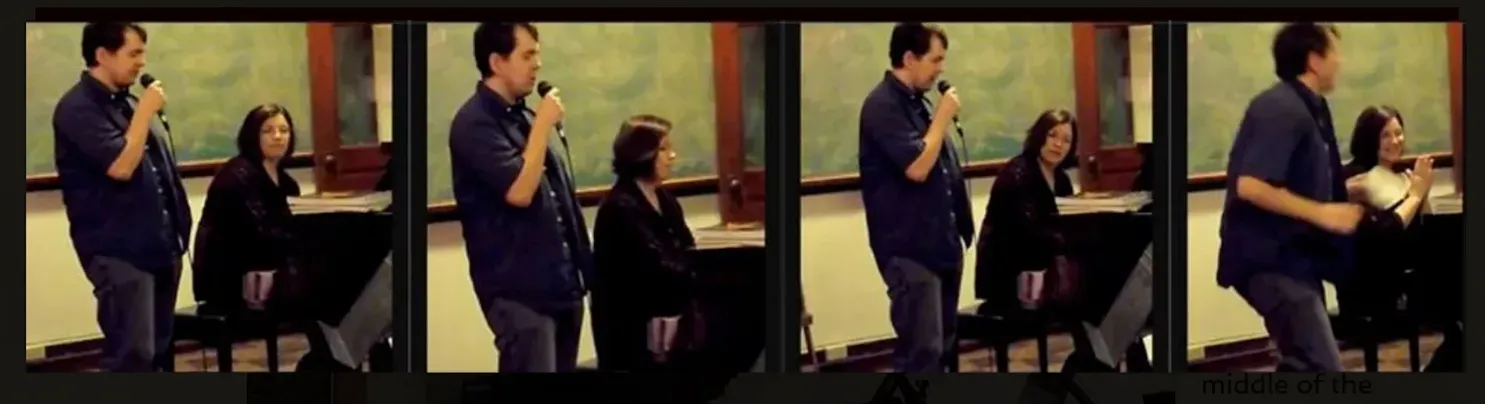
Q: What is Piano Karaoke?
A: Singers performing their favorite tunes, by request, in their best key, accompanied by a live pianist, for a live audience.
“A great way to try out your singing chops. This is not karaoke as you may know it; a live piano player accompanies you with songs you choose: pop, rock, Broadway, great American songbook, jazz. Give it a try.”
– Michael C., vocalist
Sampler Video
Reviews
1 / 6
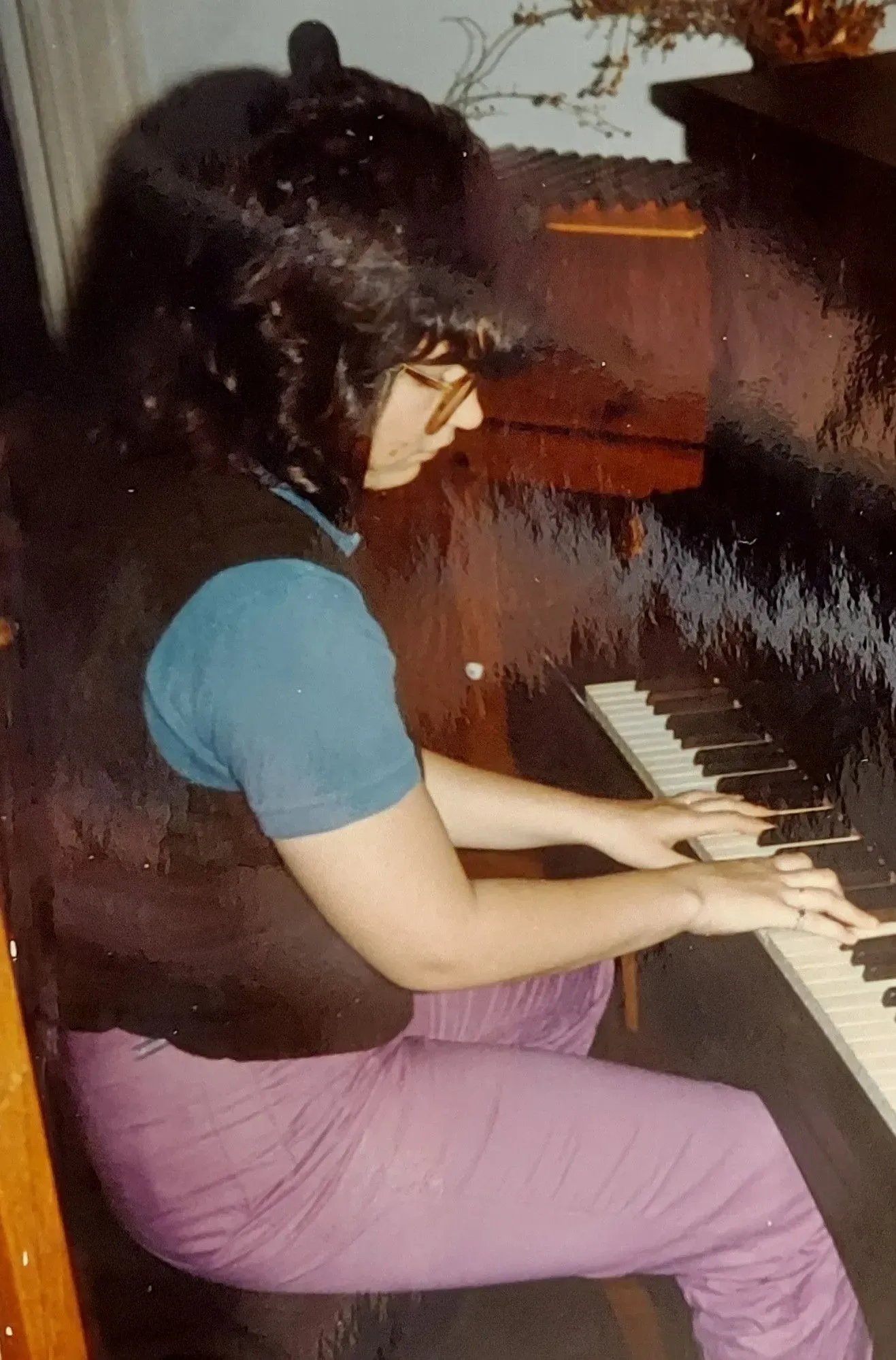
Frequently Asked Questions
Q: What is Piano Karaoke? What does it sound like?
A: Singers performing their favorite tunes, by request, in their best vocal range or key, accompanied by a live pianist, in front of a live audience. A microphone and PA system are provided for the singer.
It sounds like this! Check out our Youtube channel.
Q: Are all singers welcome?
A: Absolutely. I have several decades of experience as a musician and music educator and am a seasoned accompanist of all kinds of singers, from the strongest and most experienced to those who are new to singing or who've been told they're "not strong singers". The mood, tempo, and/or loudness can make a difference in your performance --- and we can adjust any of these factors in a split second. The piano accompaniment is there to support the singer, rather than the singer having to conform to a recording.
Q: What's the difference for the audience between Piano Karaoke and DJ karaoke?
A: The audiences for PK are extremely receptive and supportive of the performers. While a lot of wonderful socializing happens between tunes, the performance setting features a respectful audience, allowing the singers to really connect with their favorite songs.
Q: How are songs selected? What about the singer's best range/key?
A: Singers choose the tunes they'd like to perform --- up to a point!
Because I accompany by ear, the songs selected need to be ones I've heard at least a few times before.
Regardless of the era or decade (jazz standards and folk tunes from the 20s onward; perennial 60s and 70s favorites such as Elton John, The Eagles, James Taylor, The Beatles, Joni Mitchell, Carole King, and Billy Joel; holiday favorites; more recent tunes from artists such as Adele, Coldplay, Josh Groban, Maroon 5, John Legend, and more), well-known classic tunes tend to work best.
Suggest a tune and we'll see if it will work --- a majority of requested tunes work just fine! Generally, I am able to tell you right upfront whether I know a tune well enough for it to work well.
It's best if you can bring a list of tunes you'd like to try, because trying to make a mental list while enjoying the performances of other singers can be really tough.
We have two master lists of tunes that have worked well in the past --- one organized alphabetically by artist, the other by song title. Please refer to these if you're stumped about what to sing.
To figure out a singer's best key, I ask singers to sing just a few notes of the tune (singing quietly just to me, at the piano, off-microphone). There's no need to use the original key of the song --- the goal is to find out what your most comfortable range is.
Q: What is the cost for attending Piano Karaoke?
A: We ask for a sliding scale donation via cash or Venmo.
This requested donation covers our ASCAP music licensing fees (hundreds of dollars a year), our SoundCloud Unlimited Pro account ($15 a month), and the Organizer's fee for our Meetup.com account ($20 a month).
A link/QR code to our Venmo account will be visible near the piano.
Any funds left over after paying for the above items is donated to the Spirit of Harmony Foundation, which supports music education for underprivileged kids.
Q: How many songs will I get to sing?
A: It depends on how many singers show up for the session. We establish a "round robin" rotation and singers can sit out any given round if they only want to sing one or two tunes during a session.
Q: If I attend, will I have to sing?
A: Never!
Plenty of people visit us a few times before they decide to sing; others are happy to sing the second they come in the door; still others only want to listen, even after many visits.
Listening to other singers connect with the music they love best is a blast, whether you decide to sing or not; our singers and audience members are wonderful musicians and listeners and are the most supportive audience around.
After you arrive, we'll ask you if you want to join the rotation. There are no wrong answers, and no pressure! All we ask is that you respect the music and the other participants.
Q: Are there any tunes that don't work well for Piano Karaoke?
A: Yes! Here's a few songs that are good examples of beloved tunes that just don't work well with piano-only accompaniment:
John Mayer | No Such Thing
The solo piano just can't approximate the slammin' drum-and-bass-heavy full band groove and the very active hooks on this tune!
Ylvis | What Does the Fox Say
This tune is electronica-heavy and constantly driven by a prominent four-on-the-floor beat. The piano just can't replicate this kind of groove in a satisfying way.
Queen | Bohemian Rhapsody
The first section of this beloved Queen tune works beautifully -- until the crazy mid-section (around the 3:00 mark), when the multi-layered background vocals, crazy harmonies (which change just about every beat), and iconic guitar solo usually cause vocalist, pianist, or both to crash and burn!
More Q+A
Q: How do the singers read the lyrics?
A: We set up an iPad on a music stand where both the singer and I can see it, displaying lyrics from an internet lyrics site for the singer's reference. The singer scrolls through the lyric as the song progresses.
Q: Are all songs suitable for PK?
A: Songs which have an extensive or extremely loud accompaniment in their original versions (full symphony orchestras, rock bands set on "eleven," complex electronica grooves, etc.) tend to not be the best choices for piano-only accompaniment. Here are a few examples!
Ballads are almost always a great choice, as they put much of the focus on the vocals and the emotions of the singer's delivery, but any tune where the vocal melody is the main focus generally works extremely well.
Q: Can I bring sheet music?
A: Yes, you can definitely bring your own sheet music, particularly if you know it's in a good key for you. Sheet music allows me to accompany you, even on tunes I've never heard before. If you do bring sheet music, please make sure it's chord symbol-based, not just notes (or "grand staff"). This kind of sheet music is often called a "lead sheet."
Q: Is drinking allowed?
A: It completely depends on the venue! PK has been held everywhere from church sanctuaries to private parties to pubs. But please keep in mind that our focus is on the music and having a great evening with fellow music lovers --- not on drinking per se.
Even More Q+A!
Q: Can I bring sheet music?
A: Yes, you can definitely bring your own sheet music. Sheet music allows me to accompany you, even on tunes I've never heard before. If you do bring sheet music, please make sure it's chord symbol-based, not just notes (or "grand staff"). This kind of sheet music is often called a "lead sheet."
Q: Is drinking allowed?
A: It completely depends on the venue! Piano Karaoke has been held everywhere from church sanctuaries to private parties to pubs. But please keep in mind that our focus is on the music and having a great evening with fellow music lovers --- not on drinking per se.
Q: Can you learn a new tune for me?
A: Absolutely. If one of your favorite tunes is not on my list of familiar material or is just rare and obscure to begin with, we can probably still perform it --- given a little time.
send me your favorite video-based performance of the tune so that I can check it out. If it's workable, I'll let you know!
Find a web-based lyrics site which has an accurate version of the lyrics --- the version that you're familiar with.
Copy the lyrics and paste them into a word processing document
Format the lyrics so that they are double-spaced (which allows me to write in the chords over the lyrics)
I'll use your chosen video version of the tune to transcribe the chords.
At a subsequent session of Piano Karaoke, I will give you the completed lyric/chord sheet for the tune for you to hold on to. Bring it with you for future performances!
Please keep in mind that while it's a fun challenge, transcribing tunes from video or audio recordings is quite time-intensive and is something that I do as time allows.
History
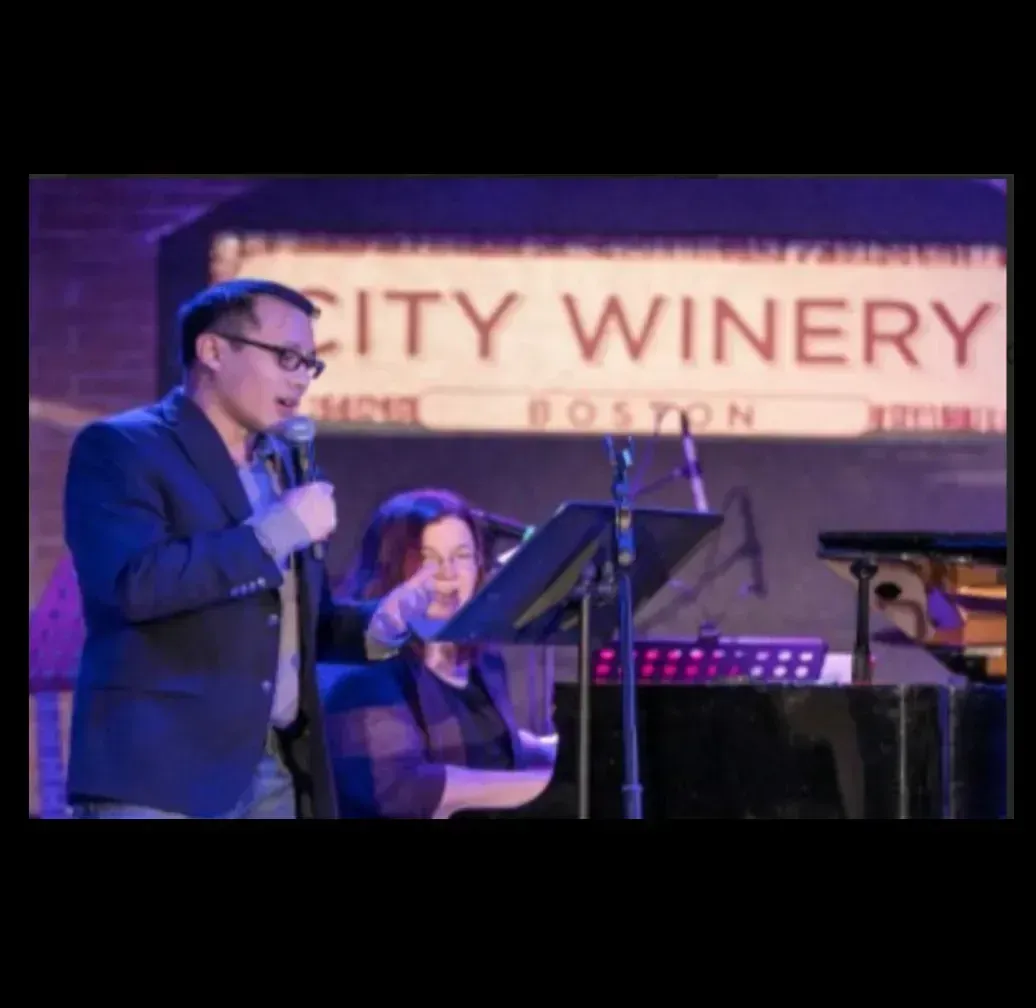
(photo: Elise accompanying singers at a bar in Quebec, 1999).
My grandmother Laura was a pianist in silent movie houses in and around New York City in the late 1920s. Although she never learned how to read music, she was a intuitive musician of the highest order, playing pop tunes and early jazz standards by ear, on the spot, by request.
By the time I was four years old, "Nana" and I regularly played piano four hands at home -- and later on, at bridge parties she threw for her friends, often accompanying any who wanted to sing during breaks. She'd name a tune, point out a starting melody note, and throw me into the deep end by gleefully playing the accompanying chords as I picked out the melody. I couldn't be more grateful for the early music lessons she gave me -- and her intrepid, interactive approach to piano.
Over the years, I accompanied friends at house parties, after concerts at small venues, and in pubs as closing time neared. I began searching for a way to somehow formalize the idea. Piano Karaoke formally began in 2009 in Nashua, NH, growing slowly but steadily among singers who appreciate the fun, singer-centric, and mutually supportive setting provided by their fellow vocalists. Although I've been an active musician and music educator for many years, I've never had more fun with music than Piano Karaoke.
Elise MacDonald, accompanist
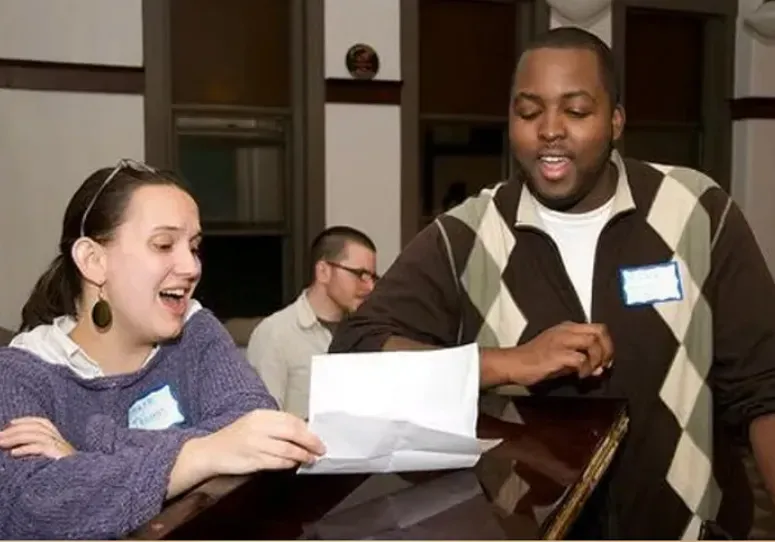
Nashua Community Music School interview, Nashua NH, 2013
Former NCMS Director Gillian Hinkle, interviewer; NCMS was a longtime PK host venue.
Gillian: What is Piano Karaoke?
Elise: It's singers performing their favorite pop, jazz, folk, and show tunes, in their best key, accompanied by a live pianist, in front of a live audience. Lyrics from an internet-based song lyric website are displayed on a large Pad for the singer’s reference.
Steve, a PK vocalist/participant: Piano Karaoke is a rewarding and altogether different experience than the karaoke sessions hosted at bars or lounges. As an artist, the live piano allows you to express your song in the key that best suits your voice in the tempo that feels most natural. You have the ability to experiment and make creative innovations to songs in ways that are impossible with pre-recorded tracks. The environment is truly welcoming to all regardless of vocal experience, style, song choice and musical genre preference.
Gillian: So are the people that attend all expert singers? I know many people are intimidated to come to sing karaoke. Do you have to have a certain skill level to do this?
Elise: Not at all. We've hosted everyone from timid performers who've never sung in public before to seasoned musical theater performers. The audience, most of whom are also singers on any given evening of PK, is amazingly supportive.
Gillian: I've had the pleasure of listening in and I love how the audience finds what is special about each singer's songs and is sure to tell them.
Steve: I have spent a great portion of my young adult life performing. I am confident that my experience with piano karaoke has helped me grow tremendously as a musician and performer. Elise consistently encourages and supports experimentation with the array of songs I have performed with her. I have watched other performers creatively interpreting music and have learned a great deal by watching them.
Gillian: What is your favorite artist to listen to or perform?
Steve: The legendary Billy Joel. Other times I like to experiment and work with songs or artists who don't use piano or keyboard in their original tracks, Last month I performed "I Don't Want to Miss a Thing" by Aerosmith; the month before I tried Coldplay's "Viva la Vida" and "Chasing Cars" by Snow Patrol. My favorite cover experiment was Chris Isaak's "Wicked Game," because of Elise's interpretation of the bass lines of well-known tunes and adapting them uniquely for the piano.
Elise: I'm a big fan of jazz, classical, and pop, with a particular fondness for Philly Soul and Motown. PK regular Gary R. likes to request "Harmony" by Elton John; that might be my absolute favorite to perform at Piano Karaoke --- probably because it was written for solo piano and voice in the first place.
Gillian: I know that this group holds a special place in your heart. Could you tell us more about why it is so special?
Elise: The mutual support among all of the singers is just beautiful to watch. Piano Karaoke also gives me a perfect outlet for my ability to play piano by ear, on the spot. Three hours go by in an instant. It's only once we're done that a bit of fatigue sets in and I realize I've been working hard!
Steve: The regulars are a wonderful group of singers who truly love music and appreciate the listening experience as much as they do the performance. We encourage each other to experiment, try new songs, and collaborate in duets. Newcomers are warmly welcomed and are encouraged to share their voices and express themselves in whatever musical genre moves them most.